
Documentaries to end all documentaries, outrageous survival thrillers, and a restored classic of controversial cinema. Here’s the rest of what I saw in October, and my goodness what a month.
Whalefall
This movie is 100% entertaining, and only about 50% in the way it’s trying to be.
Whalefall is based on the 2023 novel by Daniel Kraus, which I actually did read when it came out. The premise is simple and, frankly, ridiculous - a scuba diver with a troubled relationship with his recently drowned father goes searching in the ocean for his bones. Then, he’s swallowed by a whale. It’s not a particularly good book, but it is a quick and exciting read. When I learned Austin Abrams would be starring in a film adaptation, I was genuinely pretty excited, because there are some bizarre things that happen in the novel that I thought would be absolutely hilarious translated to the screen.
They were.
Oh how absurdly funny this movie was, not just in spite of its self-serious tone, but because of it. This movie thinks it’s a legitimate survival thriller and, in some small ways, it does succeed at that. But the sheer amount of disbelief it asks you to suspend and the preposterous contrivances of the plot turn it into more of a comedy. I don’t want to spoil some of the later insane conveniences of the film, so I’ll give an example from early on: Jay (Abrams) has one hour of air in his tank. Despite the beach crawling with coast guard, he’s somehow able to get into the water undetected. Within minutes he encounters a giant squid being hunted by a sperm whale. He gets caught in the squid’s tentacles, almost gets away, but ultimately ends up in the belly of the leviathan. From that point to the film has to happen, then, in under an hour which is absolutely ludicrous.
Abrams is a very charismatic screen presence and he does a nice job with his character, but this isn’t really a performance movie as much as it likes to think it is. Josh Brolin plays the troubled father in flashback, and his character and performance borders on caricature. There is a hilarious flashback scene early in the film in which the two characters argue on a boat, culminating in Abrams angrily stripping off his shirt, jumping off the boat, and swimming to shore. It was very, very funny.
There are some nice visual effects here! The interior of the whale is comprised of otherworldly tunnels of viscera, illuminated by bioluminescent plankton and, at one point, a sea jelly-turned-makeshift-flashlight. Seriously. One of the most genuinely horrifying sequences involves the whale’s method of chewing its food, something that doesn’t involve teeth and happens from within the stomach itself. I also couldn’t help but think, watching a guy crawl through sphincter after sphincter covered in slime, constantly moaning and groaning, that I know some folks who might just find this film rather arousing.
I cannot in good conscience call Whalefall a good movie as I don’t think it accomplishes what it sets out to achieve, except in fits and starts. I can in good conscience, however, tell you to go see this movie and take a drink every time Jay remembers a convenient innocuous comment from his dad that hides instructions for how to escape this very specific scenario. I did not regret watching it in the slightest.
5/10
The Devils
In general I try to keep these reviews confined to just new movies, but I’ll make an exception here for a widely released restoration and director’s cut of Ken Russell’s controversial 1971 film The Devils.
This film has been on my watchlist for a long time, and I was delighted to see that the director’s original vision for the film had finally been restored and was to be made accessible to audiences widely for the first time. The only Ken Russell film I’d seen before this was Altered States and frankly I kind of didn’t like it. After seeing The Devils, though, I feel I have more of a grasp on Russell’s style and I think I owe it another watch.
Based on the account of the Loudun possessions in 1634, this film dramatizes the witch trial of Father Urbain Grandier, played here by Oliver Reed, after he is accused of bewitching a convent of Ursuline nuns led by mother superior Jeanne des Anges, played by Vanessa Redgrave. After seeing it, I am unsurprised by the virulent reaction it caused in 1971, as it remains a shocking, provocative depiction of unvarnished blasphemy. Given an X rating upon its initial release, this version is rated NC-17 and it really earns it. There is graphic nudity and sexual content, prolonged sequences of torture of , and lots and lots and lots of… aberrant behavior. I absolutely loved it.
The 70s are perhaps my favorite decade for film, and for horror in particular. I’m comfortable classifying this as such, though it has much loftier goals than something like The Texas Chain Saw Massacre. It’s a film to be savored, to linger in the mind once it’s done. It’s ultimately a very spiritual film, and that’s the mistake many Christian viewers mistake. To quote British critic Mark Kermode, who had a significant hand in bringing this version of the film to the screen, “It is not a blasphemous film. It is a film that depicts blasphemy.” I suppose those two things are one and the same to some people, but this film is fundamentally about the difference between those who pursue true connection to the divine versus those who use the divine as sleight of hand to justify politically motivated actions. Certainly sounds familiar, eh?
It’s really quite fortuitous that now is the time The Devils has resurfaced. It’s very satirical and much, much funnier than I expected. It feels like Russell is skewering the present from the past. Louis XIII is portrayed, and it’s basically a drag performance. His inclusion is possibly my favorite element of the film.
The sets are designed by Derek Jarman and they are absolutely breathtaking. There are shots here I will never forget even only having seen the film once. The music is by Peter Maxwell Davies of all people (if you’ve never heard Eight Songs for a Mad King, it is… it’s something alright), and his score amplifies the ever-escalating sense of chaos and debauchery. It’s discordant and bizarre and perfectly suited to what this film is.
And the performances. My god, there are lightning-in-a-bottle performances from every member of the ensemble. Special mention has to be given to Vanessa Redgrave, though, who contorts, writhes, and screams her way through a truly transformative performance that has already joined my list of all-timers.
I could go on and on. This was a phenomenal film, and it particularly speaks to how much it connected with me that even seeing it under less-than-ideal circumstances didn’t lessen my investment. I was dealing with some abdominal pain so I got to the theater late, couldn’t find parking, and by the time I got into the packed theater my only seating option was to be sandwiched between two strangers in the back row (my worst nightmare). For the first 15 minutes I was hot, uncomfortable, and wondering if I could exchange my ticket for a different screening even though it was past the start time. Before long, though, I was sucked in and I didn’t want to miss what an incredible experience I knew it would be. I’m so glad I stayed.
9/10 (for now…)
Musk
Eugh, do you smell that?
Smells like Musk.
Yes, I saw Musk, Alex Gibney’s four-hour documentary about the richest man in the world and the existential threat he poses to us all. The question here is of course: was it worth it? And my answer is yes! Sort of. Depending on who you are. That’s to say, I didn’t regret watching it.
Alex Gibney is probably one of the US’s most respected documentarians. I haven’t yet seen his landmark documentaries about Enron or the Church of Scientology, but I have seen his 2019 film The Inventor: Out for Blood in Silicon Valley, which charts the rise and fall of Theranos and its founder Elizabeth Holmes. Oh, we’ll get to Liz in due time. Don’t you worry.
Frankly, when I found out Gibney was releasing a documentary about Elon Musk and it was four fucking hours long my initial reaction was “YES,” followed by the dawning realization that I was probably going to force myself to watch it and it would probably be a taxing experience. I decided I’d probably wait until it was available to watch on HBO, where I could watch it in four hour-long parts. Then the Paramount/Warner Bros. merger happened with Elon investing 1 billion dollars and I realized “Oh shit. He’s never going to let this thing onto streaming.” Time will tell, but I convinced myself if I didn’t see this in theaters, I would lose my only chance. It felt like my civic duty. Then, I realized it would be released on the same day as the 3-hour long Nathan Fielder and Lance Oppenheim documentary You Can See Everything, and I thought to myself, “Gee, someone could have a really psychologically torturous experience by watching those two movies in theaters back to back.”
I then realized that someone would be me.
So I did it. I planned a 7-hour theater day, my own demented Barbenheimer, and I called it You Musk See Everything. Please clap.
Overall I’m glad I had the experience, and Musk was not as punishing a watch for me as I anticipated. Alex Gibney is very much able to keep a documentary feeling lively and engaging to watch, and this really wasn’t an exception. Of course for something as sprawling and comprehensive as this, there were sections I found more interesting than others, and I did take a couple mind vacations here and there. For me, there were three damning segments of the film of particular interest, and they were fairly well spaced out: the deaths and injuries caused by Tesla’s self-driving cars, Elon’s self-proclaimed “legion of children,” and the consequences of DOGE, specifically the cutting of USAID funds that has and will starve thousands of children to death around the world.
Gibney is not a subtle filmmaker. There is no attempt to obfuscate the goals of this film from moment one: Gibney believes, and in my opinion makes a pretty compelling argument, that Elon Musk’s grip on the world is a disaster that may kill us all- well, except him and his rich friends of course. And therein lies the central issue with even making this movie at all: it’s hard not to see it as preaching to the choir. I can’t really say I learned much new information from this documentary, and I primarily found value in seeing everything laid out on the table. It does create a bigger picture that was foggy for me before seeing the film, but there aren’t really many “bombshell” moments I might have expected.
For a film as long as this, it isn’t particularly cinematic either. And there is one creative choice in the presentation I found borderline inexcusable: Musk’s AI avatar that is “interviewed” throughout. The opening of the film explains that because Musk wouldn’t take part (obviously), a database was compiled with everything he has ever said publicly and used to create a horrifying uncanny valley abomination of an AI talking head that already looks dated. What’s bizarre is that it’s used so sparsely throughout the film it makes you wonder why it’s even there in the first place. I never got used to it and it was a jump scare every time Gibney cut back to it. It also creates a weird disconnect when Gibney inevitably dives into AI in a segment called “Summoning the Demon.” For the film to ring alarm bells about AI while using it quite significantly in the film itself is… well it feels a bit…
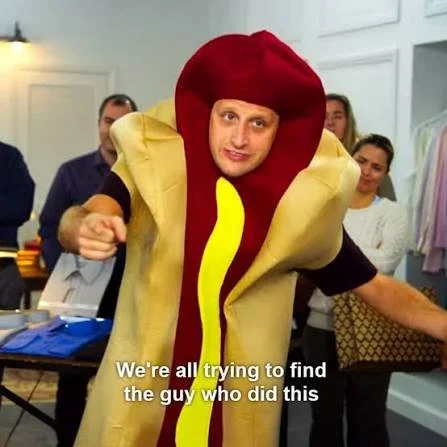
doesn’t it?
Overall, I’m glad I saw it and it was not as agonizingly boring as I feared it could be. In fact, when the 10-minute intermission began halfway through (a godsend) I actually thought “Oh, already?” It wasn’t until the final hour that I started feeling fatigued and kind of wanted it to end, but it wasn’t even close to the gun-to-my-head feeling I’ve had in other movies that overstayed their welcome (cough cough Megalopolis). As far as a recommendation goes, I’d say it is worth watching if you hear “four hour Elon documentary” and think “yeah, sounds interesting!”
7/10
You Can See Everything
I can’t remember the last time I came out of a movie unable to form a single thought other than “wow.”
This film has been blowing up the internet since its surprise announcement only a month or two ago, so I doubt I have to explain what it is, but just in case: Elizabeth Holmes, convicted fraudster and weirdo, allows a documentary crew “full access” to her family’s home for the 34 days before she surrenders herself for her 11 year prison sentence. That documentary crew includes Nathan Fielder, so those familiar with his modus operandi will know to expect the unexpected.
Co-directors Fielder and Lance Oppenheim (Some Kind of Heaven, Spermworld, Ren Faire, Primetime) have created an absolutely unique experience with this film. It is a mind-melting three hours that is sure to provoke conversation and disagreement from everyone who sees it. You Can See Everything forces the viewer to confront the nature of objective truth itself, the infallibility of memory, and the fundamental impossibility of truly knowing what another person is thinking. Quite frankly, I came out of this even less certain of what makes Elizabeth Holmes tick than I was before.
If it feels like I’m keeping my cards close to my chest here when it comes to the actual content of the film, there’s a very good reason for that. This is a film that truly needs to be experienced firsthand, and the less you know beforehand the better. It’s one of those rare movies where the art is in how the audience reacts and how it lingers in your mind afterward. I saw it two weeks ago as of writing this and not a day has gone by since that I haven’t thought about it.
This film also stretches the concept of documentary filmmaking to its limit. I haven’t seen Oppenheim’s other documentaries, but from what I understand all of them are shot in this style where someone could watch it without knowing it’s a documentary and come away believing it was a narrative feature. There is no voice-over narration, and the framing and cinematography are precise and thematically resonant. The way some tiny moments, facial expressions, and off-the-cuff comments are captured is nothing short of miraculous. I was shocked to find out after the fact that the crew had little control over the lighting, because while watching I was consciously appreciating how good the fucking lighting was. It’s a genuinely beautiful film to look at, and one of the best shot movies of the year.
You Can See Everything is a miracle. It’s a miracle this movie exists, it’s a miracle it’s this successful, and it’s a miracle it’s this incredible. Please for the love of god go see this. As of now it is my favorite film of 2026 and I really don’t expect anything to beat it.
10/10
Your Mother Your Mother Your Mother
This one was a huge surprise.
Your Mother Your Mother Your Mother is directed by Bassam Tariq and stars Mahershala Ali as Latif, a devoted Muslim, husband, father… and a hitman. When his wife dies suddenly (not a spoiler, it’s the inciting incident), care of his three children - teenage Fatiha, 10 year old Qadir, and baby Aziza, falls solely to him. Aziza’s intolerance to formula sends Latif on a Quest for Breast (milk, that is) and a LOT happens from there that I don’t want to give away.
This is, on the surface, a slick action movie with some brilliantly choreographed sequences of hand-to-hand combat à la John Wick, but the heart of the film (and what Tariq spends the most time on) is Latif’s love for his family and community and his faith. Mahershala Ali gives an incredible, soulful performance here. He falls somewhat into the stoic action hero stereotype, but there’s so much beneath the surface and the film allows us to see moments of vulnerability, uncertainty, tenderness with his children. Latif is a fully realized character brought to vivid life by Ali.
The performances from the children are also fantastic. Adia, who plays Fatiha, just received a Gotham Awards nomination for Breakthrough Performer and it is well deserved. Frankly, Jahleel Kamara (Qadir) wouldn’t have felt out of place either. There’s a strong sense of humor in the film, and both kids play heavily into that. Qadir in particular is one funny ass kid. Also giving a fun comedic performance is Abubakr Ali as Latif’s employer’s peddler of “Habibi Porn” nephew Hatty, and John Cho hits it out of the park as the villain, a militant evangelical pastor who dresses like a cowboy rapper at a Trump rally. Like I said, there’s a lot going on in this movie.
And yet, despite how much it sounds like this would be way too overstuffed for an action flick under 2 hours, it’s genuinely impressive how strongly the disparate threads are held together. I think part of what helps is that it’s all anchored by a genuine sense of spirituality. Giancarlo Esposito plays the Imam in Latif’s community, and the film periodically returns to him as a source of wisdom and clarity amid the ensuing chaos. I felt a genuine spiritual truth at the heart of this film, and it moved me in ways few movies this year have done. I can’t tell you how refreshing it is to see a film directed by a Muslim, starring a Muslim, and set in a Muslim community within a genre primarily saturated with the kind of jingoistic pro-war propaganda about “heroic” white guys shooting people in turbans that make me ashamed to be an American.
This is what true art looks like. This is quintessential soulful American filmmaking. It’s a damn shame it’s gone so under the radar. It’s one of the best movies of the year and I can’t wait to see it again.
9/10
Wildwood
Okay, I need to preface this with a bit of a disclaimer: animation is NOT my area of expertise. The only animated movies I’ve given a 10/10 are Spirited Away and Fantastic Planet. On average I’d say I see maybe one new animated movie in theaters once every 3 years or so. The last one I saw before this was Flow in 2024, which I did love, and I’ll be seeing another Latvian animation called Dog of God at the Loft Film Fest in a couple weeks. Basically, take my opinion with a grain of salt. In the same way that you should probably subtract two points from my rating of a horror film for a more neutral barometer for your own taste, you should probably add two points to my rating of an animated film to correct my bias in the other direction. That said, let’s talk Wildwood.
Laika animation is probably most known for Coraline, and I’m sorry to say I haven’t even seen that. This has been marketed as its magnum opus, a sprawling fantasy epic based on a book by Colin Meloy that reportedly took 16 years to produce and has an extraordinary runtime of 2 hours and 12 minutes (that may not sound long, but when you factor in the cost of animation and the labor required, especially in a stop-motion format, there’s a very good reason most animated features are 90 minutes or less). And get this- it’s rated PG-13! Wildwood may look like a movie for kids on the surface, but it’s at the very least as dark and violent as Princess Mononoke, if not more. The film opens with adolescent suicide, there’s blood magic, babies kidnapped by crows, sudden character deaths, and even a beheading! Do not take your young children to this movie expecting Pixar.
I wanted to see this because of that rating and promise of a more adult-oriented animated film, along with the talk around this as a potential dark horse contender for Best Picture at the Oscars. Following its enormous financial failure though, I don’t see that as particularly likely, but the Academy would be absolutely nuts not to give it Best Animated Feature. I mean, the Academy are nuts but this is such a no-brainer. Enough waffling though, what did I think of it?
The first thing anyone is going to mention walking out of the theater is how ridiculously impressive the animation is. The film blends stop-motion with CGI so seamlessly I could not tell you where the CGI was except in a few shots that would be literally impossible to do without its assistance. It is a truly breathtaking cinematic experience that does what fantasy always aspires to but rarely achieves; it actually evokes a sense of wonder at discovering a new world. Every new location is beautiful and full of life. There is so much life and movement to marvel at, the character design is creative and beautifully executed. The level of detail in the animation and production design is so meticulous and the hours upon hours of hard work and artistry that went into it are evident in every frame.
I just wish that much effort was put into the story.
Now, I get it. This is based on a book, so it’s entirely the fault of the film. It just has to be mentioned that the story is very, very derivative of very many things. There’s a ton of Lord of the Rings, some Princess Mononoke, some Avatar, some Wizard of Oz/Wicked, and a whole lotta Narnia. And that’s not inherently a bad thing, but I just hoped for something a bit less tropey and predictable. There are certainly some individual moments and aspects that broke the mold, including one very tropey scene that turns on its head unexpectedly. If this was a kids film, I wouldn’t be so critical of a well-trod story, but it isn’t a kids film. Or is it? Honestly, it’s hard to tell.
The darkest moments of this film exclude a young age group in my opinion. Granted, I was watching Lord of the Rings at the age of 3 and I turned out… well…. I’ll let you be the judge of that. But even so, children in peril is a constant theme of this film and not so much in the latter, and honestly I think this would have been even more traumatizing for me at that age. The subject matter here is more young adult. But for me, the subject matter was incongruous with the tone and how the story is told. It is very exposition heavy in ways it doesn’t need to be for an audience of adults and older kids. The tone pulls its punches so the darkest moments never really sit. And despite the somewhat dumbed down explanation on a scene to scene level, the plot zips through so many locations and conflicts so quickly I think a younger audience would have a hard time keeping up on a macro level.
Ultimately, it just can’t decide what it wants to be and that’s its fatal flaw. Still, it is very much worth watching (in theaters before it leaves!) for the stunning artistry on display alone.
7/10
Fjord
Calling it now, this will be the villain of the Oscars race this year. That is, if the Academy has the balls to nominate something actually challenging and artful, which the Gotham Awards this week were too cowardly to do.
Fjord is the newest film from one of the seminal voices of the Romanian New Wave, Cristian Mungiu. His 2007 film 4 Months, 3 Weeks, and 2 Days was the first ever Romanian film awarded the Palme D’or, the top prize at the Cannes Film Festival, and it is one of the most powerful and disturbing films I’ve ever seen. It’s an intensely realistic portrayal of a college student seeking an illegal abortion in 1980s Romania, a time when abortion laws were draconian even by American standards. It’s a film of great nuance, and though its goal is clearly (at least in my opinion) to show the abjectly horrific situations people find themselves in under conditions of extreme government control, I have seen some on the other side of the issue champion it as a pro-life masterpiece.
Similarly, Fjord won Mungiu his second Palme D’or, making him the ninth director ever to win the award twice, and it is also a politically charged film that’s causing confusion over just what Mungiu actually thinks politically. The thing is, if you actually take the time to see what he’s said on the topic, you’ll realize he’s not all that ambiguous about his left-wing beliefs. So why has Fjord been championed by the Romanian far right and written off by some leftist critics as a “MAGA movie”? In my opinion, two words:
Media illiteracy.
Fjord stars an unrecognizable Sebastian Stan and Renate Reinsve as Mihai and Lisbet Gheorghiu, a conservative, fundamentalist Christian couple who have just moved with their five children from Bucharest to a small and very progressive town in Norway. Lisbet is native to Norway, while Mihai grew up in Romania. One day, their eldest daughter comes to school with a bruise on her neck. Crucially, we don’t know exactly what caused it and there are a few possibilities based on what we see in the opening act. Abuse in the home is suspected, child protection is swiftly called, and before they know it, Mihai and Lisbet have been separated from their children while the allegations are investigated. Mihai comes to believe religious discrimination is the real motivation.
A phrase I’ve been using a lot lately to articulate my frustration with the state of, well, really any political discourse is that too many people are trying to take a sledgehammer to a problem that requires a scalpel. The common response to this film on the right is that Mungiu is a champion for conservative Christians who are being persecuted by leftist governments, and the common response on the left is that it’s spineless “can’t we all just get along” centrist hand-wringing that gives credence to the conservative worldview by refusing to take a side. Both of these are sledgehammer responses to a film that uses a scalpel with the precision of a brain surgeon.
If you’re wondering whose side the film is on, you’re already asking the wrong questions. Fjord, like the rest of Mungiu’s body of work, is not interested in telling you what to think or forcing a particular worldview on its audience. His goal is to make the audience reflect on their beliefs, and to poke and prod at potential contradictions within those beliefs. Not to chastise, not to proselytize, but to simply ask you to think. As someone who already spends a lot of time in my own head, interrogating myself on my beliefs often through hypothetical moral dilemmas, I found this film exceptionally riveting and deeply intellectually stimulating. For me, it isn’t even so much about the divide between right and left, but assimilation.
Much like You Can See Everything, much of the drama in the film comes about from single words getting lost in translation. In the former, the difference between the words “can” and “could” play a significant role, and here, the difference between “hit,” “slap,” “spank,” and “kick” are difficult to parse for characters attempting to communicate in various combinations of English, Norwegian, and Romanian. It’s also important to look at this film outside of U.S.-centric lens, and I think that’s part of the issue with some leftist American critics’ assessment. Because it’s primarily in English and Sebastian Stan is in Marvel movies, obviously this movie’s target audience is Americans, right? Uh, no. The film is primarily in English because Lisbet is the only member of the family who can speak fluent Norwegian. Mihai doesn’t speak it at all, so English is the common language between the family and the community. Sebastian Stan is a popular actor in the States, but he was actually born in Romania and holds dual citizenship. I’m hard-pressed to believe Marvel fans are seeing the trailer for a foreign 2 and a half hour character drama and line up to see it because the guy who plays Bucky Barnes is in it. And I can’t believe I even have to say this, but if Americans were the target audience, why is the film set in Norway and based on a real-life Norwegian court case?
It’s just so ironic to me that the same camp that criticizes so many movies produced in America for having a propagandistic U.S.-centric lens can look at a Romanian, French, Danish, Finnish, Norwegian, and Swedish co-production and say “well this is clearly about us” as if Scandinavia and the U.S. are politically interchangeable. And to put one final nail in this coffin before I move on to the filmmaking itself, the only time the United States are even mentioned in the film are in reference to how much support the Gheorghius are getting from the American Christian right. That’s a weird thing to include if you’re trying to portray Americans as leftist oppressors.
I rest my case.
Fjord is, at least from what I’ve seen of his films, Mungiu’s most cinematic work. It’s still grounded in realism, but there is a heightened sense of atmosphere created by many striking shots of the absolutely breathtaking scenery. I love movies with a strong sense of time and location, and this one really gave me the goods in that regard. Passage of time is communicated subtly through the physical environment and I can’t think of many other movies where some of my favorite moments were just establishing shots and wide frames of a snow-covered coastal town. There are a lot of twilight shots, and my favorite aspect of the visual language is this hazy glow around lanterns and streetlights. Mungiu is a master of visual storytelling, and Fjord is both beautifully presented and also reserved when it needs to be. It’s the kind of meticulous filmmaking I crave and Mungiu just has it down to a science at this point in his career.
The performances are across the board spectacular, and there is one absolutely heartbreaking moment from Renate Reinsve that I haven’t been able to stop thinking about, entirely through her physical performance. She’s one of the greats of our generation. Sebastian Stan is truly transformative here. It’ll be a tough race for Best Lead Actor this awards season.
I absolutely loved Fjord. Its Palme D’or win is well deserved, and its becoming kind of a litmus test for media literacy for me. It is interesting to have seen The Devils earlier this month and think about how much the criteria has changed for what is considered a controversial film from then to now. It used to be films that dared to confront the most powerful institutions and deep-seated bigotries in society. Now, a controversial film is one that dares to have nuance and empathy for its characters.
Fjord is the kind of movie I think we need more of, and I will continue to champion films like it that encourage deep reflection and engagement with their themes. True art exists to challenge your preconceived ideas. Not blindly affirm them.
10/10
That’s right, we got TWO 10s this month. Hell yeah.
Breeder
Breeder is directed by Alex Goyette and stars Dot-Marie Jones (whose portrayal of Coach Biest in Glee is really one of the only thing that sticks in my mind from watching that show when it was originally airing) as a crazy poodle breeder. Obviously the title caught my attention, and the premise sounded weird and fucked up in a way that is very much my jam.
This movie was very much not my jam.
Well, I don’t know if that’s entirely fair. It’s easily one of the worst movies I’ve seen this year, and it’s the kind of bad that fascinates me. This is a genuinely inept film in terms of plotting, character, pacing, and tone. It lays its cards on the table way too quickly and forgets to have any reason whatsoever for why the characters end up in the situations they do. It is one of the most preventable plots to a horror film I have ever seen. Nothing anyone does in this movie aligns at all with their characterization and motive, and the protagonist is so inept he frankly deserves his fate.
I think the intent here was to create a legitimate horror/thriller with a throughline of black comedy, but the incessant stock-sounding score insists that you take it seriously. None of the attempts at humor land, and everything that’s meant to be frightening or disturbing is hilarious. The actor who plays the protagonist’s fiancee was a particular lowlight, delivering every line in a disinterested vocal fry that would feel low effort in a middle school play. I found her scenes VERY funny.
I may consider making a dedicated video about this movie at some point, because I can imagine hearing a full plot breakdown second-hand would be a much more entertaining experience than watching the film yourself. Apparently I’m in the minority, as the few people who have gone out of their way to watch this seem to like it just fine, but for me? I couldn’t believe how bad it was. I didn’t even see it expecting it to be a so-bad-it’s-good movie! I genuinely thought it had the potential to be an interesting, twisted concept movie with some inspired casting. Nothing of the sort.
1/10
Wild Horse Nine
Playwright-turned-filmmaker Martin McDonagh has been making feature films since 2008’s In Bruges, but Wild Horse Nine is only his fifth feature. I need to watch his first couple movies still, but I think he’s a very interesting filmmaker and a pretty great screenwriter. This newest film mirrors In Bruges in some ways; both are kind of buddy crime comedies with In Bruges centering hitmen hiding out… well you can guess where, while Wild Horse Nine stars Sam Rockwell and John Malkovich as CIA cohorts involved in the 1973 Chilean coup that overthrew Salvador Allende and replaced him with Augusto Pinochet.
The film isn’t actually about that coup so much, and it almost entirely takes place on Rapa Nui, or Easter Island as it’s known to English speakers. This is the kind of film best experienced without knowing much about it. The story reveals itself fairly patiently, and the nature of the two characters’ relationship and why exactly they’re on the island are plot developments that should be revealed by the film itself. All I will say is Malkovich’s character is getting a bit loose-lipped and forgetful, and Rockwell’s is desperately trying to rein him in.
This is a performance movie through and through. John Malkovich is currently being favored in Oscars speculation and honestly I would not be upset in the slightest if he takes home the award for Best Actor in a Leading Role. He is absolutely spectacular; funny, obnoxious, inscrutable, heartbreaking, often all at the same time. Sam Rockwell is also a lot of fun and it is a great performance, but it’s more in line with the type of character he often plays so it doesn’t feel quite as much of a revelation. There’s also a supporting turn from an always-welcome Steve Buscemi and a small role from Parker Posey, both of whom are very good.
But this really is Malkovich’s movie. I can’t get too much into detail, but it’s ultimately a great character piece for him. McDonagh’s films are always shot through with an acidic (some might even say problematic) sense of humor, and while that’s certainly true here, it’s much more ruminative and melancholy than his other films I’ve seen. It’s not as shocking as Three Billboards Outside Ebbing, Missouri or overtly funny as The Banshees of Inisherin, and I really appreciate the level of variety in his sparse filmography. This really feels like a film from the heart.
My viewing experience wasn’t exactly revelatory or anything, but it’s sitting well in my memory and I think I will enjoy this more on a second watch with the full context of what it ultimately ends up being. For now, I’m giving it a…
7/10
Possible Love
And the last of the 19 (!!!!) movies I saw in theaters in October is, interestingly, another one where my viewing experience was… somewhat labored, but it lingers heavy in my mind. Lee Chang-dong is one of South Korea’s brightest voices in filmmaking, right up there with Park Chan-wook and Bong Joon-ho. Possible Love is his first film in eight years following the spectacular Burning in 2018, and its flowery title title belies its brutally raw emotion and complexity.
The film concerns two couples of vastly different social strata, and like the previous movie it’s best discovered through experience so I’ll leave the plot details unsaid. Lee Chang-dong always wrings every drop out of his actors, and this might be his best work in that department to date. Most of his previous films (at least that I’ve seen) are intense character studies of one particular character, but in Possible Love each character, including small parts, are brimming with depth. I listened to a Q&A with the director earlier, and he said something that really stood out to me; that his job is to create a space where the actors are able to live as the characters and not just perform them. This translates to a film where you really do feel like you’re watching real people.
The quartet at the heart of the film; Jeon Do-yeon, Sul Kyung-gu, Cho Yeo-jeong, and Zo In-sung, all give some of the finest performances I’ve seen this year. The framing device, in which Yeo-jeong’s character is making a documentary about a forcibly suppressed union strike Kyung-gu was involved in, allows for a tremendous amount of introspection from the characters. It also allows the film to interrogate its own medium. Whether Ye-ji (the documentarian) actually cares about this much poorer couple on an interpersonal level and not just as subjects of her film is a significant question the film raises, and Lee Chang-dong is an intelligent and nuanced enough filmmaker to leave it unanswered, at least explicitly. This is the “possible love” of the title, in a couple ways: is what Ye-ji and her subjects are feeling towards one another a form of love? It’s possible. Alternatively, is any love between such disparate economic classes even possible at all on an individual level? I do love a title with a double meaning.
I’ve been thinking so much about these characters and the subtleties of their actions and interactions. This is a film with a real afterlife for me, and despite how long it was and how impatient I got at times, I kind of can’t wait to revisit it. This is a dense and meaningful work, and further proof of Lee Chang-dong’s immense talent.